SillyTavern Character Card Format V3 Explained for Beginners
Understand what sillytavern character card format v3 means, when it helps, how to get started, and which mistakes beginners should avoid.
A beginner guide to sillytavern character card format v3 explained should give the reader one safe first move, one review rule, and one reason to continue or pause. A useful sillytavern character card format v3 explained article helps the reader judge voice, boundaries, discovery flow, and session quality before building a longer routine. For nsfwtavern.com, start with NSFW Tavern; bring in Browse All Characters only when it clarifies the next decision.
The practical version starts with evidence the reader can see: one character role, one opening scenario, and whether the voice and boundaries still feel coherent after a short chat. Use NSFW Tavern - Spicy AI Girlfriend & Tavern AI Chat for the local workflow, then read SillyTavern's Characters documentation and SillyTavern's Tags documentation as neutral references for structure and verification. That matters for beginners and curious readers trying to understand sillytavern character card format v3 explained without jargon overload.
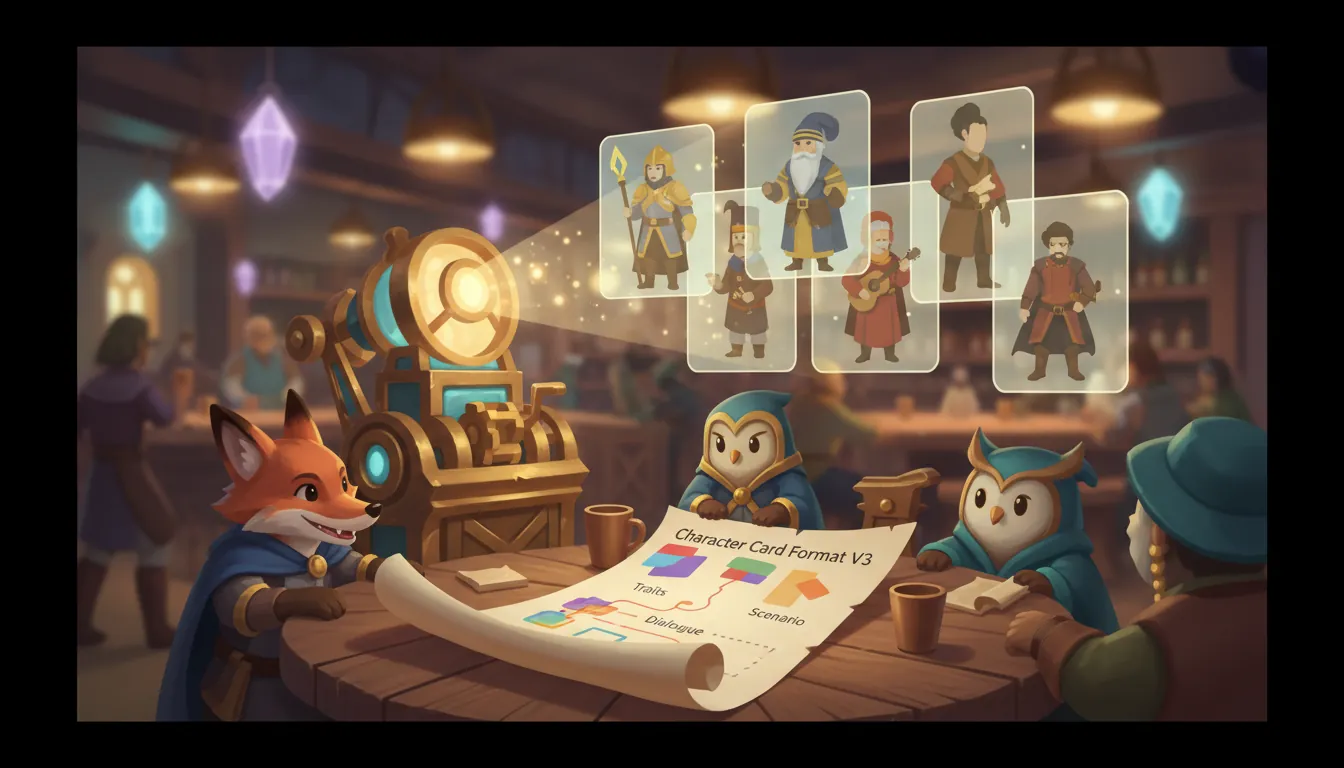
The article moves through What SillyTavern Character Card Format V3 Explained for Beginners Means on nsfwtavern.com, The First Safe Use Case to Try, and Mistakes That Make Beginners Think the Tool Failed so the reader can define the decision, test it once, and choose a next step.
Key Takeaways
- Read sillytavern character card format v3 explained through the first useful action, not through every possible feature.
- Use NSFW Tavern as the baseline, then add a follow-up path only if it improves the decision.
- Use What SillyTavern Character Card Format V3 Explained for Beginners Means on nsfwtavern.com to define the job, owner, and success rule before opening more options.
- Start with one character card, one success rule, and a short export check before adding variants.
What SillyTavern Character Card Format V3 Explained for Beginners Means on nsfwtavern.com
The first decision is not whether Sillytavern Character Card Format V3 sounds interesting. It is whether one session of 15 minutes can help with a named job for this nsfwtavern.com page. For a small team, that job might be one character role or one opening scenario; the review rule is whether the voice and boundaries still feel coherent after a short chat on nsfwtavern.com.
Start with NSFW Tavern only after that job is clear, because browsing without a success rule makes every option look equally plausible. Anchor this section in site use case and first decision, then leave out anything that does not change the decision.
- Name the exact job behind What SillyTavern Character Card Format V3 Explained for Beginners Means on nsfwtavern.com.
- Separate curiosity from the repeatable Sillytavern Character Card Format V3 decision this section is meant to support.
- Use the first session for What SillyTavern Character Card Format V3 Explained for Beginners Means on nsfwtavern.com to prove fit, not to explore every option.
Decision Criteria
- Site Use Case: match the recommendation to casual chat, creative writing, character browsing, or longer roleplay.
- First Decision: decide how this changes the first sillytavern character card format v3 explained test.
That baseline matters before the reader opens NSFW Tavern or uses SillyTavern's Characters documentation as a reference point, because both are easier to judge when the first job is already named.
The First Safe Use Case to Try
The fastest useful start for sillytavern character card format v3 explained is one concrete example, one target outcome, and one success rule. Run the smallest complete Sillytavern Character Card Format V3 pass first, then check whether the result is usable before scaling it into a larger workflow. Keep the checkpoints visible: beginner, first pass, and review.
A useful character workflow test stays concrete: one character role, one opening scenario, and whether the voice and boundaries still feel coherent after a short chat for this nsfwtavern.com page.
- Define the Sillytavern Character Card Format V3 job behind The First Safe Use Case to Try before comparing options.
- Run a small SillyTavern Character Card Format V3 Explained for Beginners check on nsfwtavern.com so the real constraint appears before the article branches.
- Use the section to preserve the one move that improves the next character session when nsfwtavern.com readers make the decision.
The useful next step is to test the character workflow idea in Browse All Characters, keep the result, and ask whether it clarifies the original decision in the nsfwtavern.com workflow.
Mistakes That Make Beginners Think the Tool Failed
The most common mistakes are not dramatic. They are vague audiences, missing format constraints, and review rules that arrive after the output is already generated. Fixing those basics usually improves Sillytavern Character Card Format V3 more than adding another feature.
Tie the advice back to mistake, symptom, and fix; those details are what make this section belong to the topic. The reader should be able to judge Mistakes That Make Beginners Think the Tool Failed with one character role, one opening scenario, and whether the voice and boundaries still feel coherent after a short chat.
- Vague audience instructions make the output sound generic.
- Missing format constraints make the same idea fail across channels.
- Changing too many variables at once makes the review step noisy.
If Mistakes That Make Beginners Think the Tool Failed leaves the reader with too many choices, return to the smallest character workflow test and compare one alternative through Blog.
What to Learn Before Going Deeper for nsfwtavern.com readers
Iteration helps only when it teaches something specific about Sillytavern Character Card Format V3. Adjust one part of the character session, review the result, and save the version that clarifies the next step. If every retry creates a different problem, stop and narrow the sillytavern character card format v3 explained setup before exporting again.
Make next lesson, stop rule, and deeper use explicit so the paragraph cannot drift into a reusable framework. A useful character workflow test stays concrete: one character role, one opening scenario, and whether the voice and boundaries still feel coherent after a short chat on nsfwtavern.com.
- Define the Sillytavern Character Card Format V3 job behind What to Learn Before Going Deeper before comparing options.
- Run a small SillyTavern Character Card Format V3 Explained for Beginners check on nsfwtavern.com so the real constraint appears before the article branches.
- Use the section to preserve the one move that improves the next character session in the nsfwtavern.com workflow.
By the end of What to Learn Before Going Deeper, sillytavern character card format v3 explained should have a clear verdict: continue with the path that worked, pause because the signal is weak, or rewrite the brief before spending more time.
FAQ
What Should Beginners Know About Sillytavern Character Card Format V3 Explained for Beginners in the nsfwtavern.com workflow?
The right fit for Sillytavern Character Card Format V3 is a workflow where the first run produces one outcome the reader can reuse, explain, or improve. Heavy cleanup is a signal to tighten the character session, not to keep scaling the same setup.
What Is the Safest First Use Case when nsfwtavern.com readers make the decision?
Sillytavern Character Card Format V3 refers to a practical way to use sillytavern character card format v3 explained for a defined job, then judge whether the result is clear enough to repeat. Start with NSFW Tavern, keep the first test narrow, and treat Browse All Characters as a comparison point only after the basic fit is visible.
Which Mistakes Make the First Try Feel Worse for this nsfwtavern.com page?
Watch for weak inputs, unclear ownership, and late review criteria in Sillytavern Character Card Format V3. Those mistakes make sillytavern character card format v3 explained feel productive while hiding cleanup work.
What Should You Learn Before Going Deeper for this nsfwtavern.com page?
Sillytavern Character Card Format V3 is a good fit when the first pass teaches the reader what to keep, change, or stop. If cleanup becomes the main work, the reader should narrow SillyTavern Character Card Format V3 Explained for Beginners before continuing.
How Do You Know the Beginner Path Worked for this nsfwtavern.com page?
After the first try, review consistency, privacy, format fit, and whether the result still serves the intended use for Sillytavern Character Card Format V3.
Final Take and Next Step
A useful sillytavern character card format v3 explained article helps the reader judge voice, boundaries, discovery flow, and session quality before building a longer routine.
For sillytavern character card format v3 explained, the right next step is a small first attempt with a clear stop rule. Start with NSFW Tavern, then use Browse All Characters only when it improves the decision. For nsfwtavern.com, that means the reader should leave with a concrete next click, not just a warmer opinion of the topic.
A strong sillytavern character card format v3 explained article leaves the reader with a concrete action, a review signal, and a reason to stop before the workflow gets busier than the decision requires.